
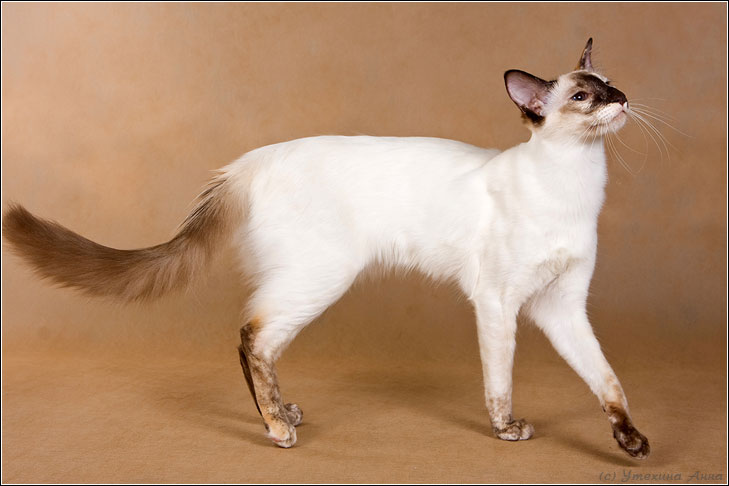
Breed overview
Javanese
Slender, vocal and endlessly involved, the American-bred Javanese belongs to the Oriental family and behaves like a true extrovert of the cat world. It sports a fine, silky single coat that lies close to its athletic body and sheds surprisingly little for a long-haired cat. Expect a chatty companion that comments on your day, follows you everywhere and turns any high shelf into a stage for acrobatics. It thrives on interactive play and dislikes being left alone for long. Comfortable around 18 to 24 degrees, the Javanese costs ₹30,000 to ₹60,000 and shares roughly 10 to 15 years of spirited company.
- Origin
- United States 🇺🇸
- Size
- Medium Breed
- Lifespan
- 10 - 15 years
- Buying price
- ₹30,000 - ₹60,000
- Ideal space
- Apartment
- Weather
- 18 - 24°C
- Coat type
- Long, Silky Coat
Top traits
Nutrition
Meal guidance, safe foods, and macro balance.
Nutritional Guide for Javanese
Talkative and athletic, the long-coated Javanese benefits from omega-3 and omega-6 fatty acids that keep its silky fur sleek and ease hairballs. Taurine deserves special attention because dilated cardiomyopathy is tied to taurine shortfalls, so complete, meat-based meals protect the heart. Wet food adds the moisture that supports urinary health in warm weather, and good fats also help the joints. Feed roughly 300 calories a day to a busy adult, and expect monthly food costs of about ₹1,500 to ₹2,000.
At a glance
- Monthly food cost
- ₹1,500 - ₹2,000
- Calories per day
- 250 / 300 kcal
Recommended foods
- Dry Kibble
- Wet Food
- Cooked Chicken
- Cooked Turkey
- Cooked Lamb
Essential nutrients
- High-grade animal protein (chicken, turkey, fish) to fuel the Javanese's high daily activity and muscle repair cycles
- Taurine amino acid to prevent dilated cardiomyopathy and preserve retinal integrity in the Javanese
- Omega-3 and Omega-6 essential fatty acids to maintain the Javanese's long-haired coat and skin barrier and support anti-inflammatory pathways
- Calcium and phosphorus minerals to sustain strong bone density and joint integrity throughout the Javanese's active life stages
- Prebiotic dietary fiber to regulate bowel transit and support efficient nutrient absorption in the Javanese's digestive system
Macro breakdown
- Protein45%
High-quality animal proteins from chicken, turkey, and fish support lean muscle mass and sustain the Javanese's high daily metabolic energy demands.
- Fats35%
Essential Omega-3 and Omega-6 fatty acids from fish oil maintain skin elasticity, coat condition, and cardiovascular function specific to the Javanese's physiology.
- Carbohydrates15%
Low-glycemic, easily digestible carbohydrates provide sustained energy release without overloading the Javanese's sensitive digestive system or triggering blood sugar spikes.
- Fiber5%
Prebiotic dietary fiber promotes smooth intestinal transit, regular bowel health, and efficient nutrient absorption critical for the Javanese's gut integrity.
Foods to avoid
- Raw Fish
- Onions & Garlic
- Chocolate & Caffeine
- Grapes & Raisins
- Dairy Products
Prohibited ingredients
- Onions and Garlic: a prohibited substance that poses toxicity risk and digestive harm to the Javanese's sensitive physiology
- Caffeine: a prohibited substance that poses toxicity risk and digestive harm to the Javanese's sensitive physiology
- Chocolate: a prohibited substance that poses toxicity risk and digestive harm to the Javanese's sensitive physiology
- Alcohol: a prohibited substance that poses toxicity risk and digestive harm to the Javanese's sensitive physiology
- Bones: a prohibited substance that poses toxicity risk and digestive harm to the Javanese's sensitive physiology
Feeding guidelines
- Add omega-3 and omega-6 fatty acids to keep the long coat sleek and ease hairballs.
- Feed complete, meat-based meals with ample taurine, since DCM is tied to taurine shortfalls.
- Include wet food for moisture that supports urinary health.
- Rely on good dietary fats to help the joints given patellar tendencies.
Recommended brands
Health and wellness
Common issues, vaccinations, and daily care.
Healthcare and Preventative Guide for Javanese
The Javanese is a graceful, vocal breed with a silky long coat and striking blue eyes. Health concerns include liver amyloidosis, progressive retinal atrophy (PRA), dilated cardiomyopathy (DCM), patellar luxation, strabismus, and dental disease. This high-energy cat needs 30 to 60 minutes of vigorous play daily and prefers 18 to 24 degrees Celsius. Their silky coat needs regular brushing in Indian humidity to prevent tangles. Annual screening for their multiple genetic predispositions is essential. Monthly health costs average INR 500 to 700.
At a glance
- Energy level
- High
- Monthly cost
- ₹500 - ₹700
- Exercise
- 30 - 60 min/day
Common health issues
- Liver amyloidosis: has an impact on the liver. Weight loss, lethargy, and loss of appetite are early warning signs.
- Progressive retinal atrophy (PRA): results in sight loss. Through routine eye examinations, it might also be identified earlier.
- Dilated cardiomyopathy (DCM): a heart disorder. May result in exhaustion, difficulty in breathing, or even fainting.
- Patellar luxation: knee joint problems. May cause limping or missing steps when walking.
- Strabismus: crossed eyes (cosmetic, not harmful). It doesn’t affect vision and requires no treatment.
- Dental disease: common in all cats without oral care. Brushing and vet cleanings help prevent it.
Recommended activities
- Use wand toys with quick, erratic motions for athletic catching and jumping.
- Provide multi-level cat trees for high-speed climbing circuits.
- Offer talking or chirping toys to engage their vocal, interactive personality.
- Set up fetch games with small lightweight toys, as Javanese cats often retrieve.
- Introduce clicker training for advanced tricks that challenge their sharp intelligence.
Signs of stress
- Difficulty seeing in low light or bumping into objects may signal PRA progression.
- Excessive vocalization beyond their normally chatty nature can indicate pain.
- Limping after jumping or reluctance to land may suggest patellar luxation.
- Fatigue during play or coughing could point to dilated cardiomyopathy.
- Loss of appetite or vomiting may indicate liver amyloidosis concerns.
Vaccination schedule
| Growth stage | Vaccines |
|---|---|
| Age 6-8 Weeks | FVRCP (Feline Viral Rhinotracheitis, Calicivirus, Panleukopenia). to build protective immunity for the Javanese |
| Age 10-12 Weeks | FVRCP (Booster). to build protective immunity for the Javanese |
| Age 14-16 Weeks | FVRCP (Final Booster), Rabies. to build protective immunity for the Javanese |
| Age Adult | FVRCP, Rabies. to build protective immunity for the Javanese |
| Age Adult | Rabies. to build protective immunity for the Javanese |
General care tips
- Schedule comprehensive annual screenings covering eyes, heart, liver, and joints.
- Brush the silky coat at least three times weekly to prevent matting in humid weather.
- Monitor knee stability during play and report any clicking or instability.
- Provide dental chews and brush teeth regularly to manage dental disease.
- Keep indoor environments well-lit to support cats with potential vision changes.
Senior care
- Increase cardiac and liver screening frequency to every six months after age 8.
- Maintain well-lit, uncluttered pathways if vision loss from PRA becomes apparent.
- Add joint-support supplements for patellar health as directed by your vet.
- Transition to a liver-supportive diet with veterinary guidance if enzyme levels rise.
Grooming
Coat care, hygiene, and shedding notes.
Coat Care Notes for Javanese
The Javanese looks its best when the coat is brushed often enough to stop tangles before they start. The size is easy enough to handle at home, but the routine still needs to be regular. Because this cat moves around a lot, the coat can show wear faster if grooming slips. Monthly grooming usually sits around INR 800 to INR 1,500, depending on how much coat work the cat actually needs.
At a glance
- Shedding level
- Low Shedding
- Monthly cost
- ₹800 - ₹1,500
Hygiene checklist
- Brush the Javanese several times a week, paying attention to the chest, belly, behind the ears, and around the tail.
- Work out small knots early instead of waiting for them to tighten into mats.
- Dry the coat fully after baths so moisture does not settle into the fur and leave it feeling heavy.
- Clean the ears on a regular schedule, because long-coated cats can collect wax and debris around the head.
- Keep the nails trimmed and the teeth brushed so the rest of the routine stays simple.
Grooming benefits
- Stops mats and tangles from building up in the Javanese's coat.
- Keeps the fur soft, clean, and easier to manage through humid weather.
- Helps you catch skin issues hidden under the coat before they get worse.
- Makes bath time and drying less of a struggle because the coat stays in better shape.
- Leaves the cat looking neat without turning grooming into a fight.
Adopt and shop
Buying guidance, adoption guidance, and monthly costs.
Bringing home a Javanese
For a Javanese, the main question is whether your home can handle the breed's energy, routine, and long-term care. Its mid-sized frame keeps things manageable if the routine stays steady. A moderate-energy cat usually settles best when the household routine is predictable. The coat may be easy, but dust, shedding, and small skin issues still show up if you ignore it. The purchase price typically falls between INR 30,000 to INR 60,000, so it helps to plan ahead rather than decide on the spot.
At a glance
- Market price
- ₹30,000 - ₹60,000
General overview
- Make sure the budget is comfortable before you bring the Javanese home, because the upfront price is only part of the picture.
- A steady routine matters more than a perfect one, because this breed settles best when life feels predictable.
- The Javanese's coat is not difficult, but it still benefits from a little consistency and attention.
- Its medium build makes home planning fairly straightforward if the essentials are in place.
- It also helps to have a vet relationship ready early, especially because the Javanese may need breed-aware advice as it settles in.
Buying guidelines
- Any breeder or seller should be able to show clear lineage records for the Javanese.
- Check vaccination history, deworming records, and any vet clearances instead of taking the seller's word for it.
- A quick visit tells you more than photos do, especially when you want to see the cat's living conditions and handling.
- Handover should only happen once the cat has the standard health steps covered and documented.
- A written health guarantee and some post-sale support make the transition easier if questions come up later.
Adoption guidelines
- A rescue or shelter should be able to tell you the Javanese's health background and how it behaves in daily life.
- A good adoption match is not only about breed, but about whether the cat's energy fits your routine. A calmer breed usually adapts more smoothly when the home stays predictable.
- Prepare a quiet corner, clean bedding, and a litter area before the cat arrives so the first few days feel less overwhelming.
- A post-adoption vet check is a good idea, because it gives you a clean starting point for future care.
- A gentle start usually works best, because most cats need time before they show their full personality. The breed settles best when the new routine feels steady rather than rushed.
Monthly expense summary
- Monthly care₹2,800 - ₹4,200
- Food₹1,500 - ₹2,000
- Grooming₹800 - ₹1,500
- Health₹500 - ₹700
Frequently asked questions
Common questions about the Javanese.
What are the common health issues in the Javanese?
The Javanese can be prone to conditions such as Liver amyloidosis, Progressive retinal atrophy (PRA), and Dilated cardiomyopathy (DCM). Not every cat will develop these, but routine veterinary checkups, a balanced diet, and a healthy weight go a long way in early detection and prevention.
Can I keep a Javanese in an apartment?
Yes, the Javanese is well suited to apartment living. It stays content indoors as long as it gets its daily activity and mental stimulation. Set aside a quiet resting spot and keep to a predictable routine so this cat feels secure in a smaller space.
How much activity does the Javanese need?
Plan for about 30 to 60 minutes of activity each day for the Javanese. This is an active breed, so interactive play, climbing towers, and puzzle or hunting games work best to prevent boredom and restlessness.
Is the Javanese suited to the Indian climate?
The Javanese adapts reasonably well to most parts of India, being most comfortable around 18 to 24 degrees Celsius. Even so, provide shade and fresh water through the hottest months and avoid activity during the hottest part of the day. Basic heat precautions keep this cat healthy across Indian conditions.
What is the price of a Javanese in India?
A Javanese kitten in India typically costs ₹30,000 to ₹60,000, depending on lineage, breeder reputation, and city. Always choose an ethical breeder who shares health and vaccination records, and consider adoption as a rewarding alternative.
Does the Javanese shed a lot?
The Javanese has a shedding level described as low shedding. This makes grooming easier, though regular brushing still keeps the coat and skin healthy.
What is the temperament of the Javanese?
The Javanese is known for being Playful, Friendly, Affectionate, and Vocal. With a high energy level, this cat does best when its social and mental needs are met through regular interaction and enrichment. They are best suited to an apartment and settle in well when their daily routine is consistent.